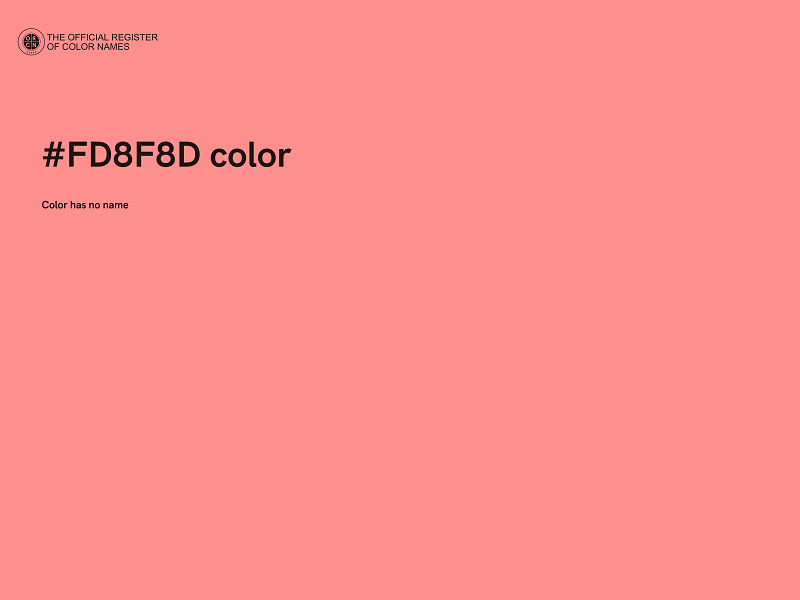
Information about #FD8F8D color

#FD8F8D color image

Basic facts about this digital color

The digital color #FD8F8D is classified in the Register under the Red Color Family, with Full Saturation and Very Light brightness. Its exact recipe is rgb(253, 143, 141) — 99.2% red, 56.1% green, 55.3% blue — and for print it converts to CMYK 0 / 43 / 44 / 1. Curious how these numbers work? Read our RGB color codes guide.

#FD8F8D presents itself as a pure, full-strength warm red — one that appears airy and pastel-like. It is a natural fit for clean interfaces where content needs room to breathe. In The Official Register of Color Names it is practically indistinguishable from Tulip (#FF878D). Its next-closest registered neighbors are Mona Lisa (#FF9889) and Soft Coral (#F8998D).

Technically, the mix leans on its red channel (rgb(253, 143, 141)), which gives #FD8F8D its character. If you plan to put text on a #FD8F8D background, choose black — the contrast ratio is 9.5:1 (passing WCAG AAA), while white manages only 2.2:1. No one has named #FD8F8D so far. Register a name for it and it becomes a permanent record.

#FD8F8D color variations

View this color variations of tints, shades, tones and hues.

#FD8F8D color harmonies

Color harmonies are pleasing color schemes created according to their position on a color wheel.

Complementary

Complementary color schemes are made by picking two opposite colors con the color wheel. They appear vibrant near to each other.
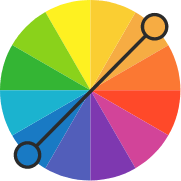
Complementary color schemes

Split complementary

Split complementary schemes are like complementary but they uses two adiacent colors of the complement. They are more flexible than complementary ones.
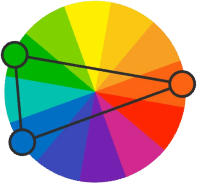
Split complementary color scheme

Analogous

Analogous color schemes are made by picking three colors that are next to each other on the color wheel. They are perceived as calm and serene.
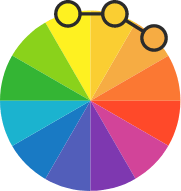
Analogous color scheme

Triadic

Triadic color schemes are created by picking three colors equally spaced on the color wheel. They appear quite contrasted and multicolored.
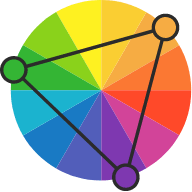
Triadic color scheme

Tetradic

Tetradic color schemes are made form two couples of complementary colors in a rectangular shape on the color wheel.
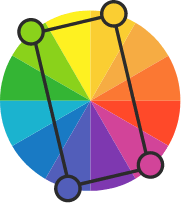
Tetradic color scheme

Square

Square color schemes are like tetradic arranged in a square instead of rectangle. Colors appear even more contrasting.
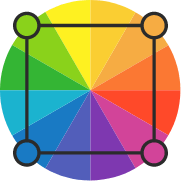
Square color scheme

Nearest named colors to #FD8F8D

The closest officially registered color names in the Register, ordered by similarity — your shade’s neighborhood is already being claimed.

Tulip color link
Tulip

#FF878D

Mona Lisa color link
Mona Lisa

#FF9889

Soft Coral color link
Soft Coral

#F8998D

Peachy Pink color link
Peachy Pink

#FF9A8A

Ibis Wing color link
Ibis Wing

#F58F84

One Kin Dye color link
One Kin Dye

#F08F90

Sweet Pink color link
Sweet Pink

#EE918D

Wewak color link
Wewak

#F1919A

#FD8F8D color backgrounds & wallpapers

Download color wallpaper / background for your Desktop PC, Tablet or Mobile phone.

Conversions between color systems and etc.

  • HEX#FD8F8D
  • RGB253, 143, 141
  • CMYK0, 43, 44, 1
  • HSL1°, 97%, 77%
  • HSL Precise1.071°, 96.552%, 77.255%
  • HSV1°, 44%, 99%
  • HSB1°, 44%, 99%
  • HEX IDFD8F8D
  • DECIMAL ID16617357
  • Name LengthThis color has no name
  • Color Family (Hue)Red
  • Saturation FamilyFull Saturation
  • Lightness FamilyVery Light
  • Percentage of Red in RGB99.2%
  • Percentage of Green in RGB56.1%
  • Percentage of Blue in RGB55.3%
  • This page visited6 times
  • Counting from2025-01-01